The West has always preferred a timid, half intelligent and a dependent India rather than a decisively independent and self-reliant one. A pliable Indian leadership suits the West best, says Tarun Vijay.

At a time when Donald Trump is making belligerent noises, Chinese President Xi Jinping responds by overhauling the People's Liberation Army and restructuring the command of the PLA Navy to emphasise Beijing's resolve to dominate the South China Sea.
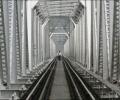
India has planned 14 strategic railway lines in areas bordering China, Pakistan and Nepal, but most of these projects are stuck for want of funds. Anusha Soni reports

'Pakistan thinks it is winning this low intensity conflict.' 'It is a serious observation. Half the battle is convincing your adversary that he cannot make headway.' 'A lot depends on how the internal professional management of the army and the handling of situations that are bound to rise sooner than later in his command, are done.'

Chief Justice of India J S Khehar on Saturday criticised the electoral politics in the country, saying poll promises are "routinely unfulfilled", caste issues projected differently to get a majority and party manifestos do not have any linkage to socio-economic justice.
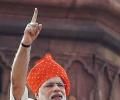
Prime Minister Narendra Modi has created a flutter with his first Independence Day speech. While diverted the national attention to social issues, Modi smartly avoided political traps.
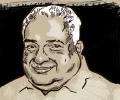
Mr T V R Shenoy, who contributed columns to Rediff.com from its birth, passed into the ages on Tuesday evening. As we grieve and mourning his passing, Ambassador M K Bhadrakumar bids adieu to an unusual human being, a sage for our times.

'100 Fayazs will bring a change in Kashmir, that's why they don't want a Fayaz.'

'The intrusion in Chumar, during and beyond the Chinese president's visit, is unprecedented and has qualitatively changed the tone of the India-China relationship,' says Jayadeva Ranade, a member of the National Security Advisory Board.

The curative petition and other legal remedies still available to Yakub Memon are part of his rights as a prisoner condemned to death. Does the Maharashtra government want to deprive him of these rights, asks Jyoti Punwani.

'She was the only prime minister who won a decisive military victory.' 'She won a real war; she didn't play video games on prime time TV over surgical strikes!' 'She understood power better than any other politician, saw it as her birthright and used it with inborn expertise.' 'Every politician today who tries to be a "supremo" through populism and absolute control over his or her party is referring to the Indira Gandhi playbook!'

'China refuses to talk to India on nuclear or ballistic missile issues and conclude any de-targeting agreement as Beijing did with Russia or a non-targeting agreement with the US.'
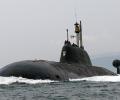
'We have been found seriously wanting in addressing our undersea warfare capability and China's emergence is a cause for concern.'

'If you put colour-coded internal security maps of India in May 2014 and now, the picture won't be flattering to Modi.' 'Failures on internal security are now piling up and can break Modi's momentum,' says Shekhar Gupta.
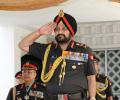
On the eve of Army Day, Army Chief General Bikram Singh says he will raise this issue with the Rajya Raksha Mantri, Jitendra Singh, who oversees the Department of Ex-Servicemen Welfare, reports Ajai Shukla.

The assembly polls are seen as a test of Prime Minister Narendra Modi's popularity, especially in the wake of demonetisation.

'The new generation voter is hyper-nationalistic, but it isn't essentially illiberal.' 'They will find the rants of Adityanath as laughable as Irfan Habib's. They will also find the BJP's polarising approach to vote-gathering unacceptable if it fails to deliver jobs and growth,' says Shekhar Gupta.
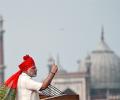
'Independence Day has been India's annual general meeting. For the most part, it has been a forgettable experience of ritual observances. Not so this year... Mr Modi instead presented what I call a moral balance sheet of India,' says Shreekant Sambrani.
Ministers in the Narendra Modi government have been busy making presentations on their 100 days of work. But what these presentations do not mention is that decisions by ministers have been few, with plenty of papers and files moving to the Prime Minister's Office, which is increasingly emerging as a centralised clearance point, even for routine and ordinary issues. Though policy paralysis was a term used freely for the United Progressive Alliance regime, questions are now being raised about pending decisions across ministries and whether at least some ministers have turned redundant.

'The voter thinks that the State is not going to impartially deliver services, provide justice, basic law and order, social insurance -- so as a voter it's very rational that I may choose a criminal who will help me navigate the State.' 'A weak State allows a criminal politician to be the person who provides that guarantee to mediate whatever problem the citizen has with the State.'

This is the first time that a Muslim lady has filed a nomination in a Presidential election.
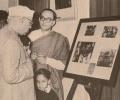
'The evidence about a plane crash that killed Netaji as stated in the Shahnawaz Committee report, is quite strong.' 'None of the files that I read bear any evidence that it was Nehru who ordered this kind of intrusive surveillance.' 'The government's excuse that declassifying some files may affect India's relations with friendly foreign countries is not a credible one.' Subhas Chandra Bose's grand-nephew and Trinamool Congress MP Sugata Bose on reports that his family was under surveillance for 20 years and the rumours over Nataji's death.

'This is not a small change, it's a BIG change. People wanted to hear the voice of their PM. They can do so now. This is a big parivartan.'

In 1954, a bench of eight Supreme Court judges declared that the Constitution-makers did not recognise the Fundamental Right to Privacy. It is hoped that a larger bench as and when constituted will uphold the Right to Privacy as a Fundamental Right overruling the 1954 decision, says the distinguished lawyer, P P Rao.

The IPL has produced more controversies in its short lifespan than any other sporting league in history.
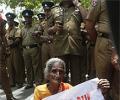
Prime Minister Manmohan Singh's decision not to attend the Commonwealth Heads of Government Meeting at Colombo has once again put the focus on alleged cases of human rights abuses in Sri Lanka.

AAP has been vociferous since its inception and has mainly raised issues pertaining to corruption. A political party must have crisp and specific standon all issues which concern the nation not just corruption or secularism; and AAP has failed to deliver on all these counts, says Aditya Shah and Aadit Kapadia.
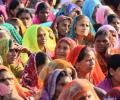
The perception that 'winnability' is based on gender is very strong, even though, if you break up the electoral success rate by sexes, the women who do win elections are proportionally far more successful than the men who win, given the huge number of men they have to beat.

The plan of UID/Aadhaar-based surveillance does not end with the collection of fingerprints and iris scan, it goes quite beyond it and poses a lethal threat to the idea of India, says Gopal Krishna.
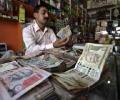
If the high security notes introduced in 2015 were kept in the system, the pain due to demonetisation can be ameliorated to a certain extent. But unfortunately, such thought process have no place in the hasty demonetisation decision.

'The book has immense value because it reveals the inner workings of the think-tank which appears to provide facts and insights to Modi, though he himself takes the final decisions and articulates them in his characteristic rhetorical style,' says Ambassador T P Sreenivasan.
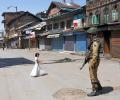
We must repeal AFSPA to begin to heal Kashmir, and to enhance India's moral stature and that of the army, says Ajai Shukla
By removing Avinash Chander last week, the government has chosen to sacrifice the organisation's most potent symbol of success
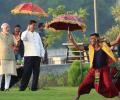
A sensational interview on India-China ties, with the man most qualified to answer.

This is the joint statement issued by the ministry of external affairs on the visit of US President Barack Obama to India.
The second and final part of former cabinet secretary Naresh Chandra's interview to Sheela Bhatt.

Atal Bihari Vajpayee would seek to placate the hawks in the RSS by stating that the writing of history should not be one-sided. At the same time, he would project a moderate 'Nehruvian' image of himself as the archetypal liberal politician who would strive to attain a balance between conflicting viewpoints. A fascinating profile of the former prime minister and Bharat Ratna by Paranjoy Guha Thakurta and Shankar Raghuraman.
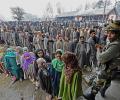
'The youth have given New Delhi a chance. Now it is up to the policy-makers in Delhi to respect their political choices.'

If you are more than your rhetoric about a strong and united country, give us our due -- treat us as countrymen, says an ordinary Muslim in this open letter.
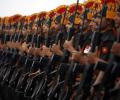
Internal simmering in the army has come to a boil after the government tries to retain a discriminatory promotions policy.
 © 2026 Rediff.com - Advertise with us - Disclaimer - Privacy Policy - Sitemap - Feedback - About us - Terms of use - Grievances